
Posting randomly and hoping something works isn’t a strategy — it’s guessing. A real social media plan connects your goals to a repeatable weekly process.
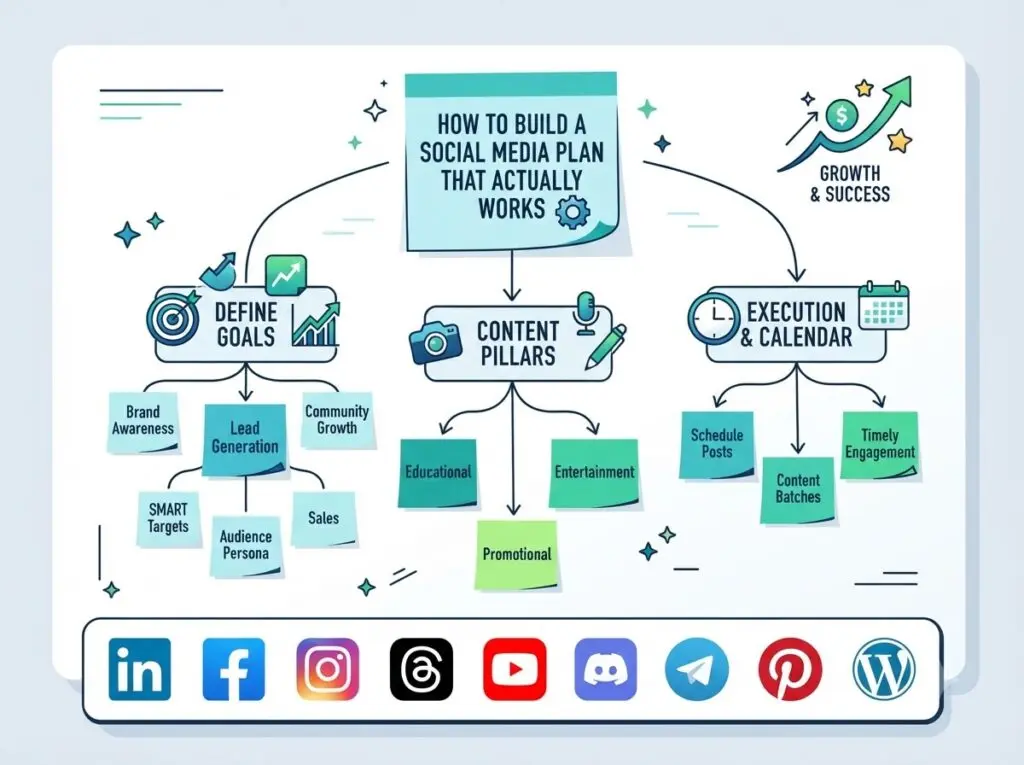
Step 1: Set one primary goal per platform
Trying to grow followers, drive sales, and build community all at once on every platform dilutes your effort. Pick one primary goal per platform (e.g., LinkedIn for authority, Instagram for community, Pinterest for traffic).
Step 2: Choose platforms based on where your audience already is
Don’t spread across every network just because you can. Start with 2–3 and expand once those are consistent — see the full platform list (LinkedIn, Facebook, Instagram, Threads, YouTube, Discord, Telegram, Pinterest, TikTok, WordPress).
Step 3: Define your content mix
A simple, sustainable split: 40% educational/value content, 30% engagement (questions, polls, behind-the-scenes), 20% promotional, 10% experimental/trend-based.
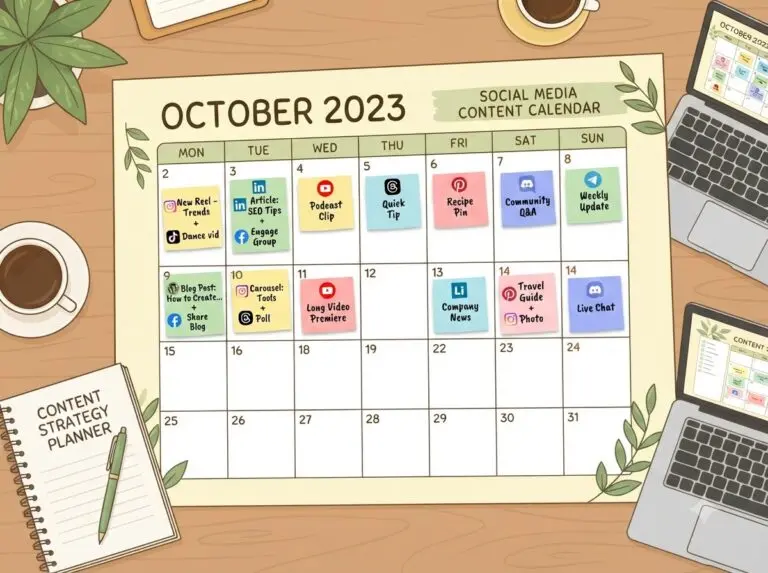
Step 4: Put it on a calendar
Turn the mix into an actual schedule using a planning template or a content calendar template.
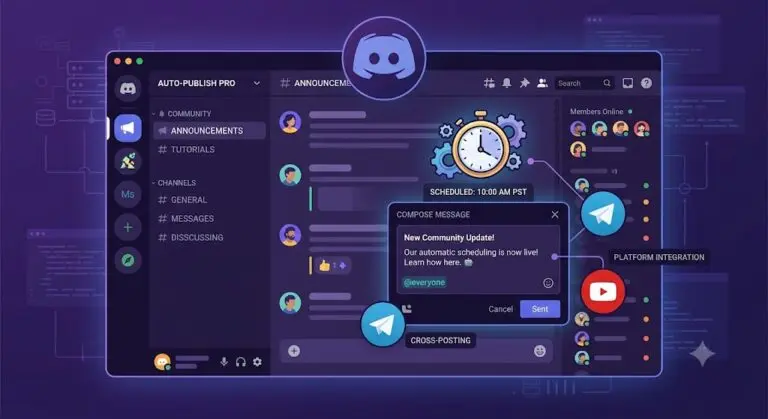
Step 5: Automate execution
A plan that requires daily manual posting will eventually break. Load your content into a queue, set up recurring time slots, and let automatic publishing handle the rest. Use a UTM builder to track which platforms actually drive traffic back to your site.
Step 6: Review monthly, not daily
Resist adjusting your plan based on one post’s performance. Check your performance insights monthly and adjust the content mix based on patterns, not single data points.
If you’re planning for a team
Add collaborators through shared workspaces so approvals and drafts don’t live in scattered messages — see how team collaboration works.
A social media plan only works once it’s turned into a scheduled, automated routine — strategy on paper doesn’t post itself.