
Your bio is often the first — and only — thing a new visitor reads before deciding to follow or leave. That’s exactly why using AI for bio writing has become such a common shortcut for creators and brands who don’t want to overthink 150 characters.
Why most bios underperform
Most bios either try to say too much (cramming in every service or interest) or say too little (just a name and a link). Neither gives a visitor a reason to stay. A clear bio answers three things fast: who you are, what you offer, and why someone should care.
How an AI bio generator helps
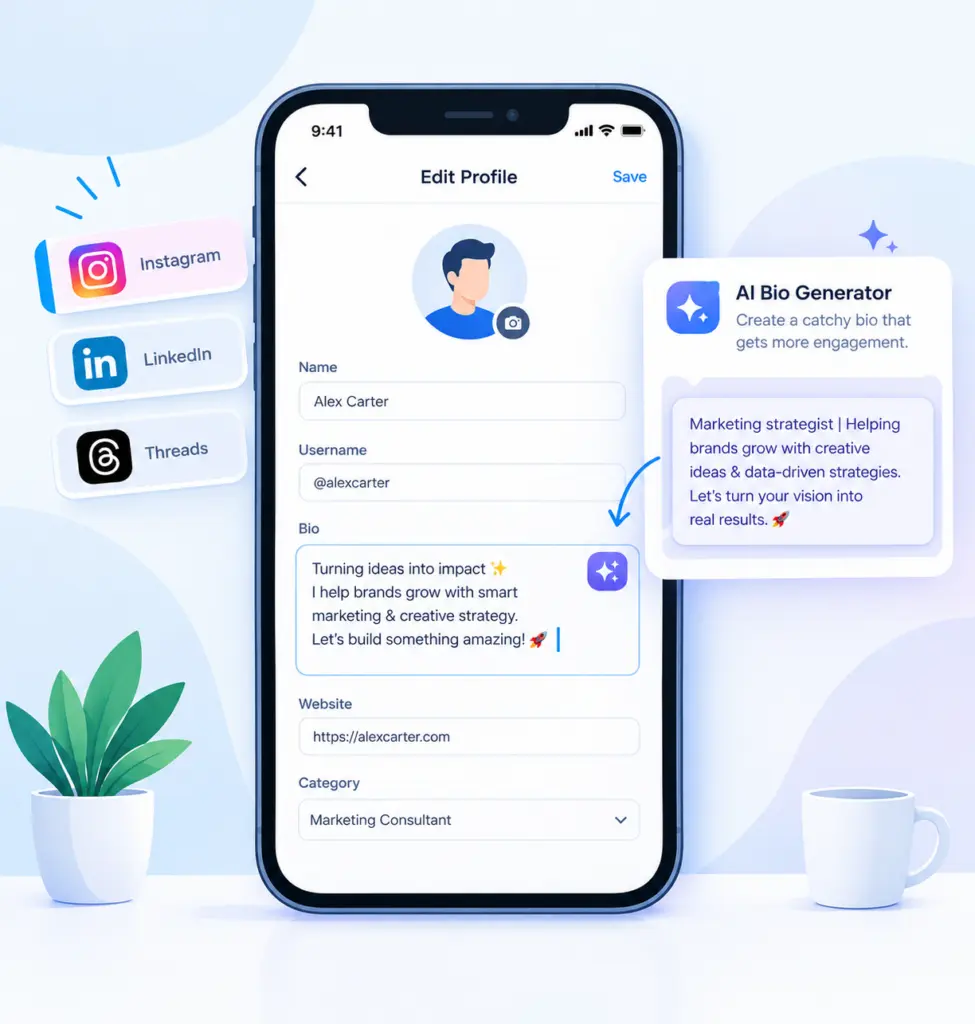
Instead of staring at a blank field, an AI-generated bio tool takes your niche, tone, and goal and produces several structured options you can tweak. Try TheAutoReach’s AI bio generator — useful whether you’re writing for Instagram, LinkedIn, or Threads.
What a strong bio structure looks like
Line 1: who you are and what you do. Line 2: the specific outcome or value you provide. Line 3: a call to action or link context (e.g., “New posts every week ⬇”). If your call to action links to a campaign, tag it with a UTM builder so you can track bio-link clicks in your performance insights.
Platform-specific bio differences
Instagram and Threads bios reward personality and brevity. LinkedIn “About” sections can be longer and more outcome-focused. If you manage bios across networks, keep a consistent core message but adjust the tone when drafting for each platform so nothing feels copy-pasted.
Bio isn’t a one-time task
Update your bio when your offer changes, when you launch something new, or seasonally if relevant. Pair it with fresh captions using an AI caption generator, or explore TheAutoReach’s AI social media agent to keep your bio, captions, and hashtags aligned automatically.
An AI-generated bio won’t replace your voice, but it gives you a strong structural starting point instead of a blank field and a deadline.